
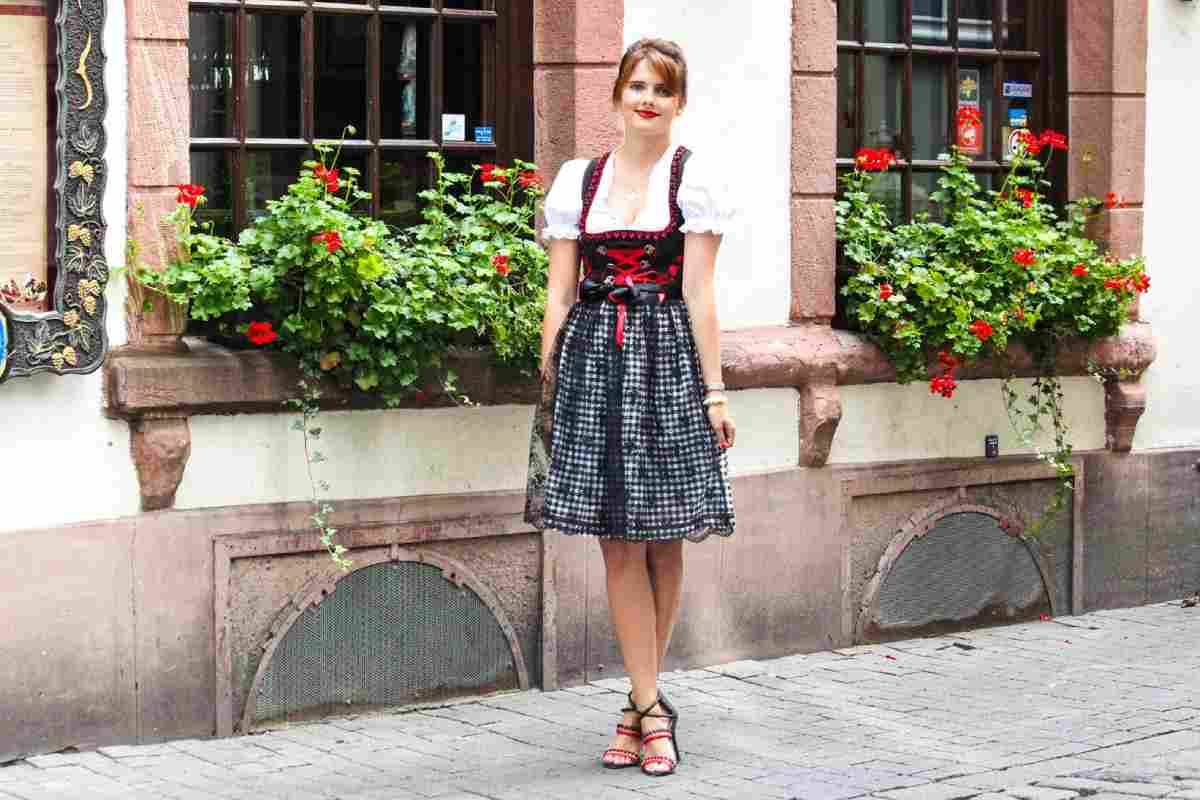
With its centuries-old tradition, the iconic Alpine dirndl has been subtly and profoundly influenced by the constant evolution of haute couture and fashion trends. The Oktoberfest dress code for women, the dirndl, is becoming a haute couture model combining tradition and style. From the streets of Munich to the catwalk, you will see how this traditional German garment is transformed into a canvas for haute couture creativity, exploring the interplay of tradition and fashion trends.
Couture Integration in Dirndl Styling
Haute Couture, synonymous with high fashion, embodies precision, luxury and artistic meticulousness, celebrating craftsmanship in fashion. Moving from exclusive pieces to everyday wear, Haute Couture combines tradition with innovation, transforming traditional garments into dynamic expressions of style.
In this transformative journey, the dirndl, a Bavarian folk costume, becomes a canvas for couture under the influence of haute couture. Every detail bears witness to the virtuoso craftsmanship, transforming the dirndl into a masterpiece that symbolises the perfect fusion of tradition and contemporary creativity. This metamorphosis breathes new life into cultural clothing, transcending its roots to become a vibrant expression of individuality and style.
Did You Know?
Traditionally, Volksfest participants wore dirndls and lederhosen. However, in the 1970s, festival-goers did not commonly wear traditional costumes, even at Oktoberfest. According to Simone Egger, wearing traditional clothing at Oktoberfest was once considered “absurd and even shameful.” Today, wearing jeans to a Volksfest is unthinkable, as traditional costumes are mandatory. In a 2004 study, Egger found that 50% of Oktoberfest participants in her sample were wearing the Tracht for the first time. She also noted a growing interest in Tracht-style clothing each year.
Key Fashion Trends Impacting Dirndl Styling
Fashion trends constantly change and encompass aspects as diverse as garment cuts, patterns, colour palettes, fabric choices, and general design principles. The goal is to identify the dominant preferences and aesthetics currently capturing the attention of both fashionistas and designers.
Once current fashion trends have been identified, the focus shifts to understanding how they translate into traditional clothing, such as the German women’s dirndl. This may involve examining individual design elements in detail. For example, if asymmetrical silhouettes are in fashion, how has this affected the shape of the dirndl? Are modern fabrics used instead of traditional ones? How does the choice of colours relate to current trends? This stage involves connecting general fashion trends and specific adaptations made to dirndl design.
The final stage involves showcasing and highlighting aspects of dirndl design that reflect a combination of tradition and modernity. This may include highlighting details such as contemporary embellishments, unconventional fabric combinations, or modern interpretations of traditional patterns.
Fashion Trends Impacting Dirndl Styling
| Fashion trends | Impacting on Dirndls |
| Asymmetrical silhouettes | Redefines traditional dirndl shapes with innovative cuts |
| Sustainable Materials | Incorporates eco-friendly fabrics, promoting
sustainability |
| Bold Colour Palettes |
Introduces vibrant hues and unexpected colour combiations |
| Minimalist
Embellishments |
Shifts focus to sleek and understated design elements |
| Vintage Revival | Reinterprets classic dirndl styles with a vintage touch |
Runway Showcases & Dirndls in High Fashion
Due to its cultural significance, the book “Runway Shows and the Dirndl in Haute Couture” explores how the traditional dirndl takes centre stage on the haute catwalk. It closely examines the transformation of these iconic garments, which undergo a metamorphosis, breaking free from their familiar context and becoming masterpieces of haute couture.
Designers bring a fresh, contemporary take to the dirndl on the catwalk. This includes meticulous attention to design detail and distinctive stylistic decisions that distinguish these haute couture pieces.
The study goes beyond the surface, revealing how these garments are reimagined. This includes an examination of the shapes, patterns and embellishments that breathe new life into the traditional dirndl. The book celebrates the craftsmanship and innovative ideas that transform the dirndl from a cultural symbol into a high-fashion item, presenting a fascinating story in the dynamic world of haute couture.
Note: The dirndl is increasingly considered not only a symbol of Bavaria, but also a symbol of Germany. Oktoberfest celebrations have also spread to regions such as Münster and Westphalia, where the dirndl and lederhosen have become integral to German culture.
We can cite the successful marketing of dirndls in German national colours at football matches, which was especially noticeable during the 2006 FIFA World Cup. Moreover, German luxury fashion houses produce and sell exclusive dirndl models.
Dirndl Styling Elements Reflecting Fashion Trends
| Dirndl styling Elements | Influenced by Trends |
| Bodice Embroidery | Asymmetrical Silhouettes, Vintage Revival |
| Eco-Friendly Fabric Choices | Sustainable Materials |
| Vibrant colour Palettes | Bold Colour Trends |
| Clean Lines and Silhouettes | Minimalist Embellishments |
| Lace and Ruffle Accents | Vintage Revival |
Celebrity Endorsement and Influence
Celebrities are often trendsetters, and their choice to wear the couture dirndl has become a notable trend in high fashion. Here are some examples of celebrities who have worn the dirndl, adding a touch of glamour to various events:
| Celebrity | Couture Dirndl Designer | Occasion/Event |
| Marion Müller | Karl von Modenschau | Oktoberfest Gala |
| Sophie Becker | Anna Schneider | Red Carpet Premiere |
| Sebastian Hartmann | Maria Steinmetz | Fashion Awards Ceremony |
| Isabella Wagner | Franz Haute Couture | Celebrity Charity Event |
| Sarah Müller | Luisa Fashionista | Film Festival Gala |
Celebrities as Catalysts for Dirndl Styling Trend
Celebrities play a key role in shaping fashion trends. Here are some influential figures who have helped develop the dirndl trend:
| Celebrity | Styling Influences |
| Heidi Klum | Embraces unconventional dirndl variations |
| Orlando Bloom | Advocates for gender-neutral dirndl fashion |
| Emma Watson | Promotes sustainable and ethically made dirndls |
| Alexander Ludwig | Showcases dirndls with modern and edgy elements |
| Priyanka Chopra | Wears dirndls on international red carpets, elevating them |
Celebrity endorsements bring attention to couture dirndls and change perceptions, making them more accessible and appealing in high fashion.
Impact on Public Perception and Acceptance of Dirndls in High Fashion
Celebrities who wear elegant dirndls aren’t just making a splash on the red carpet. They’re changing the perception and look of dirndls to be modern and elegant. Here’s how they do it:
1. Celebrity Influence
Celebrities, as trendsetters, make the dirndl more special by wearing it as part of their elegant outfits. This makes them more noticeable and appreciated by more people.
2. Increased Recognition
These outfits become even more noticeable when celebrities wear the dirndl to essential events. This makes people think that the dirndl is something elegant and modern, not just an ordinary garment.
3. Transformation of Tradition
People begin to perceive the dirndl not just as old-fashioned, but as something modern and elegant. Celebrities play a key role in making people perceive the dirndl in a new and relaxed way. When trendsetters see the dirndl, the Bavarian tradition becomes known worldwide.
4. Influence on our clothes
Celebrities have a significant influence on fashion. So when they wear the dirndl, ordinary people want to wear it too. It’s not just celebrities; it influences what everyone considers elegant.
A balance between tradition and haute couture
As a cultural symbol, the dirndl is a subtle combination of tradition and haute couture influences. Maintaining its traditional meaning is critical, paying homage to craftsmanship and symbolism. Haute couture brings innovation, complementing tradition with luxury and contemporary style or challenging norms with innovative design.
The delicate balance lies in integrating modern elements without overshadowing the Bavarian regional authenticity, ensuring that the dirndl gracefully evolves and remains true to its roots.
Conclusion
We are on a transformation journey, where tradition and haute couture intertwine to shape the evolution of the dirndl dress for women. With the influence of haute couture elements, it has transcended its cultural origins to become a canvas for artistic expression and individual style. The dirndl continues to evolve and is influenced by changing trends in high fashion. From luxurious fabrics to innovative silhouettes, each interpretation adds a new chapter to the history of the dirndl style.
Don’t Miss These: Unlock the Secrets to Successful Crowd Shots